


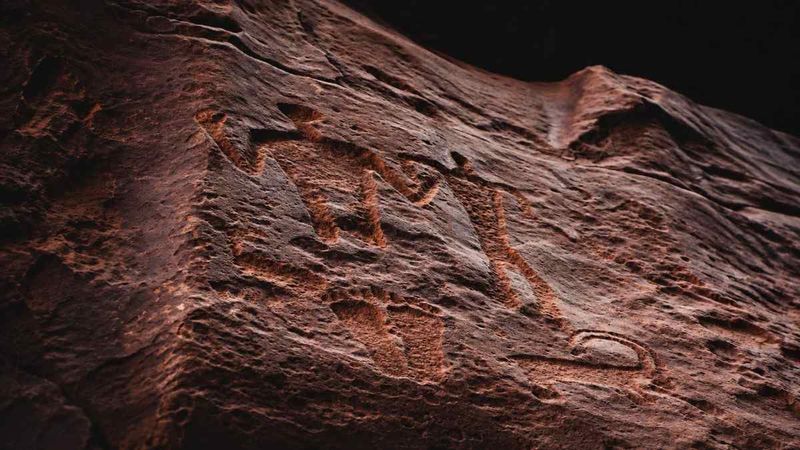
People were telling stories long before anyone wrote down a single sentence. A hand pressed against cool stone. A line of animals caught mid gallop. A cluster of dots that probably meant something specific to whoever put them there, even if we'll never know what. None of it needed an alphabet.
It's easy to file cave paintings away as decoration, or as a slide in an art history lecture you half remember. But they're worth more attention than that. They're clues about how early humans watched their world, made sense of it, and passed that understanding along. So the real question is this: what do cave paintings tell us about where our urge to tell stories actually comes from?
What Are Cave Paintings, Exactly?
Prehistoric cave art refers to the images early humans left on the walls and ceilings of caves and rock shelters. Most of what survives dates back to the Paleolithic period, the long Stone Age stretch when people lived by hunting and gathering. You'll find examples across Europe, Africa, Asia, Australia, and the Americas, so this wasn't some one off regional quirk. People everywhere seem to have done this.
Not everything under this umbrella counts as "painting" in the strict sense. Researchers generally split cave art into a handful of types:
- Paintings, made by applying pigment directly to rock
- Engravings, where lines were carved or scratched into the surface
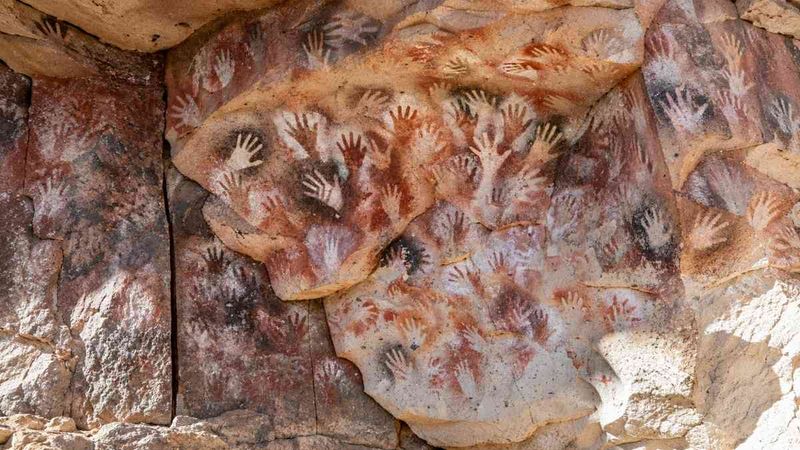
- Hand stencils, made by pressing a hand to the wall and blowing pigment around it
- Symbols and markings, like dots, lines, and shapes whose meaning we still can't pin down
Caves happen to be good at preserving things. They shield images from weather, sunlight, and the general wear of time, which is why some of these works are still readable tens of thousands of years later. In a lot of ways, they're the closest thing we have to a direct line into the minds of people who lived that far back.
Why Did Early Humans Paint on Cave Walls?
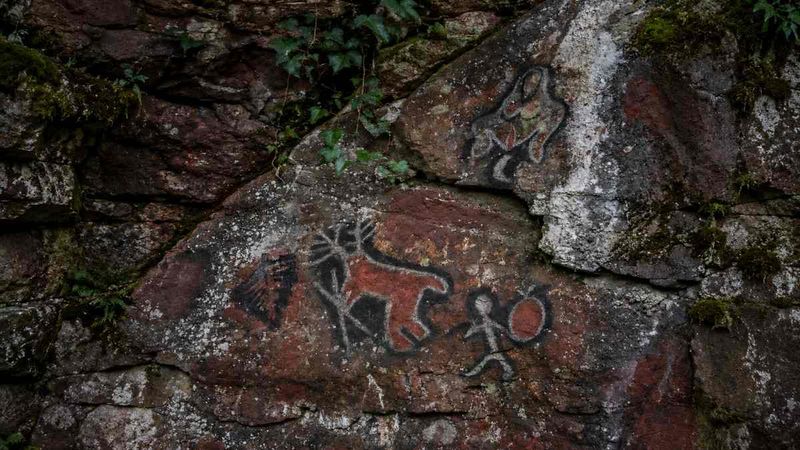
Here's the honest answer: nobody actually knows. There are several competing ideas, and probably the smartest move is to hold all of them loosely instead of picking a favorite.
Communication: Images may have carried real information, things like which animals lived nearby, or a memory worth passing down between people and generations.
Ritual and belief: A number of researchers connect cave imagery to ritual practice. Plenty of paintings sit deep inside caves, in spots that are genuinely hard to reach, which hints that certain spaces may have carried special meaning.
Recording the world: Animals show up again and again, often drawn with a surprisingly sharp sense of movement and anatomy. Whatever these images were really for, they clearly came from close, patient watching.
Social and cultural expression: Images might have meant something specific within a community, functioning a bit like a shared symbol or story does now. A lot of the meaning probably lived in the group, not just in the picture itself.
Nobody's settled this debate, and it's likely that different paintings served different purposes depending on where and when they were made.
How Cave Paintings Became Early Visual Stories
This is really the core of it. A cave painting doesn't need to function like a comic strip to count as storytelling. It just needs to get an idea across through images, and early humans were clearly doing that.
Images Communicate Without Needing Words
A bison drawn on a wall reads as a bison whether you speak any particular language or none at all. That's the quiet strength of visual communication: it links an image to an idea without needing a shared spoken or written system, which is part of why pictures travel across cultures so easily.
Showing Movement and Action
A lot of the animals in these paintings aren't just standing there. Legs are angled to suggest running. Some figures were drawn multiple times, or with overlapping outlines, creating a sense of motion. Under flickering torchlight, on uneven stone, some of these images may well have looked like they were moving. Even the arrangement of the figures can suggest activity, and that's a storytelling trick artists still lean on today.
Read More: The Connection Between Play and Creativity in Learning
Choosing What to Show
Here's something that's easy to overlook. Early humans didn't paint everything in front of them. They skipped the plants, the rocks, most of the everyday scenery. They picked specific animals, specific figures, specific marks.
That act of choosing matters. Deciding what's worth showing, and what gets left out, is one of the earliest forms of editing and visual communication that we know of. It's a way of saying: this is what matters.
From Single Images to Real Meaning
Meaning can also build up through combination. Where an image sits, what's around it, and which symbols appear nearby can all shape how it gets read. That said, it's worth being careful here. Not every cave painting is telling a literal story with a beginning, middle, and end. Sometimes an image is just one idea, or a memory, or a symbol on its own, and that's fine too.
There are some striking exceptions, though. In Sulawesi, Indonesia, researchers have described a cave painting that appears to show human-like figures interacting with animals, dated to tens of thousands of years ago. Finds like this suggest scene based imagery might be older than we assumed.
What Techniques and Materials Did Early Humans Use?
Making these images took real skill, planning, and a working knowledge of materials.
Natural Pigments
The palette came straight out of the ground:
- Ochre, an iron rich mineral that produces reds, yellows, and browns
- Charcoal, made from burned wood, for deep black
- Mineral pigments, including manganese based blacks
These materials had to be ground down, mixed, and prepared before they were ever usable. That alone tells you there was forethought involved.
How the Paint Was Applied
Researchers have suggested a range of methods: fingers, brushes made from natural materials, pads of moss or fur, or pigment blown through hollow bones or reeds to create a kind of spray. Hand stencils are a good example of that last technique. Press your hand to the wall, blow pigment around it, lift your hand away, and you're left with a ghostly outline.
Working With the Cave Surface
Some of the most striking work happens where the artist and the rock seem to have worked together. A natural bulge becomes an animal's shoulder. A crack becomes its back, or a hint of movement. The curves of the cave weren't obstacles to work around. They were part of the image.
It's a nice reminder that creativity often means working with what's already in front of you. Observation and imagination were working side by side here, and the environment itself became part of the process.
What Do Cave Paintings Tell Us About Early Human Communication?
Even with all the uncertainty, a few things come through pretty clearly.
- People were visual thinkers, using images to represent whatever mattered most to them.
- People could turn observation into representation. Seeing an animal, remembering it, and then recreating it on a wall takes memory and abstraction, a real mental leap.
- People could load meaning into symbols. Some marks don't resemble anything specific, which suggests they carried meaning beyond their appearance, which is more or less how language gets started.
- People were already sharing ideas visually, long before any writing system existed.
A Few Famous Examples
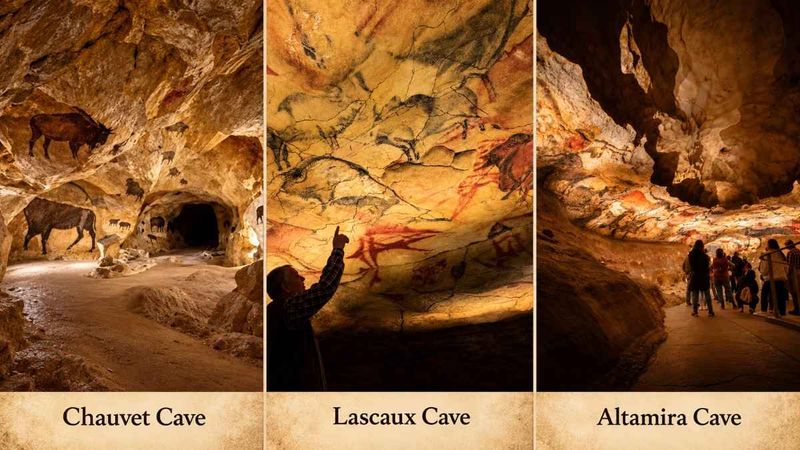
You don't need to memorize a list of sites, but a handful have shaped how we understand this whole field.
Chauvet Cave, in southern France, is known for its vivid animal imagery, lions, horses, rhinos. It's among the oldest and best preserved decorated caves we know of, and it's played a major role in cave art research.
Lascaux Cave, also in France, is famous for its large, lively animal paintings. It was discovered in 1940 and quickly became one of the most recognized cave art sites in the world. These days, because of concerns about damage, visitors see a replica rather than the original.
Altamira Cave, in northern Spain, is celebrated for its animal imagery, especially the bison across its ceiling. It's also a great example of artists using the natural bumps and curves of the cave to give their figures real volume.
Beyond Europe, hand stencils in Argentina's Cueva de las Manos, along with rock art in Australia, southern Africa, and Indonesia, all point to the same thing: people across the globe reached for images to communicate. It's part of a much bigger story about how deeply human the urge to make marks and meaning really is.
What Actually Makes Cave Paintings Visual Storytelling?
One way to think about it is as a simple four step chain: observation, then selection, then representation, then meaning.
- Observation - the artist notices something about the world, an animal, a pattern, a movement.
- Selection - they decide what's actually worth showing.
- Representation - that idea becomes an image, through pigment, line, and form.
- Meaning - the image takes on significance for whoever sees it, shaped by subject, composition, movement, symbols, and context.
That last step includes the viewer. Meaning isn't something the maker fully controls. It's also shaped by whoever's looking, and what they bring with them.
The key point is that visual storytelling doesn't require characters, dialogue, or a written plot. Sometimes one strong image in the right spot says enough on its own.
What Can We Actually Know, and What Can't We?
It's tempting to read cave paintings the way you'd read a book. But good interpretation starts by being honest about what we actually have evidence for.
Researchers can study the materials used, how old the work is, where it sits in the cave, the technique involved, and patterns that repeat across sites. From that evidence, they build interpretations, and some of those interpretations are genuinely solid.
What we usually can't know is what the artists actually intended. We can't ask them. We don't know what words they used, or what stories they told each other around a fire at night.
That gap between evidence and interpretation matters. Evidence is what you can actually observe. Interpretation is the reasoning built on top of it. Treating every image as a clearly understood narrative would be a mistake, and honestly, it would flatten out the mystery that makes this art so compelling in the first place.
From Cave Walls to Modern Visual Storytelling
It might sound like a stretch to connect a Paleolithic cave to a phone screen, but the thread isn't hard to follow.
Images still carry ideas: Posters, photography, film, illustration, graphic novels, digital media, all of it leans on images to communicate. Most of us scroll past dozens of visual messages before we've even had breakfast.
We still tell stories without words: Think of a facial expression caught in a photograph, the way a movie frame is composed, a color that sets a mood, or a sequence of images that builds a feeling. None of that needs a caption to work.
The medium changed. The instinct didn't: To be clear, prehistoric imagery and modern media aren't the same thing, and they weren't made for the same reasons. But the impulse behind them feels familiar: notice something, decide it matters, share it with someone else.
What Cave Paintings Teach Us About Creativity
Cave art is a good reminder of what creativity actually involves.
- It starts with observation.
- Visual storytelling depends on selection and interpretation, not just copying what's in front of you.
- We decide what matters, rather than just recording everything.
- Creativity connects what we perceive to what it means.
- Visual expression can let people share an idea before they even have the words for it.
That last point is worth sitting with for a second. A lot of us know what it's like to feel something we can't quite put into words. Drawing, painting, or making something visual can be a way in when language falls short.
Why Visual Storytelling Still Matters Today
We live surrounded by images, and being able to actually read them is a real skill. Visual literacy shapes how we learn, communicate, and make decisions, whether we notice it or not.
It shows up in education, where a good diagram or illustration helps an idea stick. It shows up in media and advertising, where images quietly shape opinion. It shows up in design, film, digital content, and social media, where one image can travel further than a whole paragraph of text ever could.
The better we understand how images build meaning, the more thoughtfully we can make them, and the more critically we can look at the ones aimed at us.
Conclusion
Humans were communicating visually long before written language existed. Cave paintings show observation, representation, and symbolic thinking all working together, and they hint at minds that were already curious, expressive, and deeply social.
We may never fully know the stories behind individual paintings. But they tell us something important about human creativity anyway: we've always looked closely at the world, made meaning out of it, and found ways to share what we saw.
From the first marks on a cave wall to the visual stories we make today, that same instinct, to observe, imagine, and communicate, still sits at the heart of creativity. Art Journal Foundation. Create the Creator.
Frequently Asked Questions
1. What do cave paintings tell us about early human communication?
They show that early humans used images to represent animals, ideas, and possibly beliefs, which suggests they could observe, remember, and share meaning visually long before writing existed.
2. Why are cave paintings considered an early form of visual storytelling?
They communicate through images, the choice of subject, arrangement, and symbol. Not every painting tells a literal story, but many show movement, selection, and meaning, the core tools of storytelling.
3. How is visual storytelling structured in prehistoric art?
There's no single fixed structure, but it helps to think in terms of observation, selection, representation, and meaning. Composition, placement, and symbols all shape how an image ends up being understood.
4. What techniques and materials did early humans use for cave art?
Natural pigments like ochre, charcoal, and mineral colors, applied with fingers, natural brushes, or blown through hollow tubes. They also worked with the natural shape of the cave wall itself.
5. What is the meaning of prehistoric cave paintings?
Researchers have proposed communication, ritual, close observation of nature, and cultural expression as possibilities. The exact meaning behind many paintings is still debated and probably always will be.
6. Are cave paintings the earliest form of art?
They're among the earliest well documented examples, but it's hard to say for certain what came first. Other forms of expression, like body decoration or work on perishable materials, may have existed earlier and simply haven't survived.