


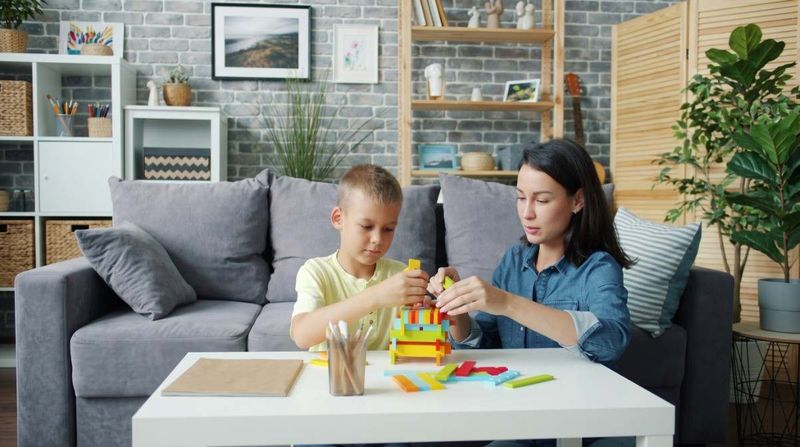
Ask most people to picture "serious learning" and they'll picture something that looks nothing like play: quiet rows, a worksheet, a right answer waiting at the bottom of the page. Play gets filed under recess, under early childhood, under the stuff that happens before the real work starts.
That split doesn't hold up once you actually watch what play does to a student's thinking. A child mixing paint colors just to see what happens is running an experiment. A student turning a random shape into a spaceship is testing an idea against reality and revising it on the fly. That's the heart of play and creativity in learning: a lot of what looks like fooling around is students trying something, seeing what comes back, and adjusting, which is more or less the definition of creative work at any age.
This post looks at what play actually does for creative development, why it doesn't stop mattering once kids hit middle or high school, and how teachers can make room for it without turning every lesson into free time.
What is play-based learning?
Play-based learning is exactly what it sounds like: using open-ended, self-directed exploration as the vehicle for learning, instead of direct instruction. The distinction that matters isn't "fun versus not fun." It's who's driving. In a traditional lesson, the teacher sets the path and the destination. In play-based learning, the student sets the path, and the destination is often something nobody planned in advance.
That doesn't mean play-based learning has no purpose. A teacher who hands out unusual materials with a loose prompt has a learning goal in mind, curiosity, material exploration, comfort with ambiguity. The lesson just doesn't announce itself as a lesson. Researchers who study art and play have made this exact point: play "facilitates a number of different processes important in creativity," and that's true whether the student is five or fifteen.
Why play matters for creative development
Play gives students something a graded assignment usually can't: room to be wrong without cost. That single shift changes a lot of what students are willing to attempt.
When the outcome doesn't need to be correct, students will try things they'd otherwise avoid. They'll ask "what if I mix these two colors" instead of asking "which color am I supposed to use." They'll follow a mistake somewhere interesting instead of erasing it. Over time, that habit of low-stakes experimentation becomes the foundation students draw on when they do face high-stakes creative problems, a portfolio piece, a design brief, a project with real constraints.
There's a practical classroom reason this matters too. Art educators sometimes talk about the "affective filter," the idea that stress and pressure make it harder for students to actually absorb what they're learning. Play brings that pressure down. A student who isn't worried about failing is a student who's actually available to learn something.
How Play encourages creativity
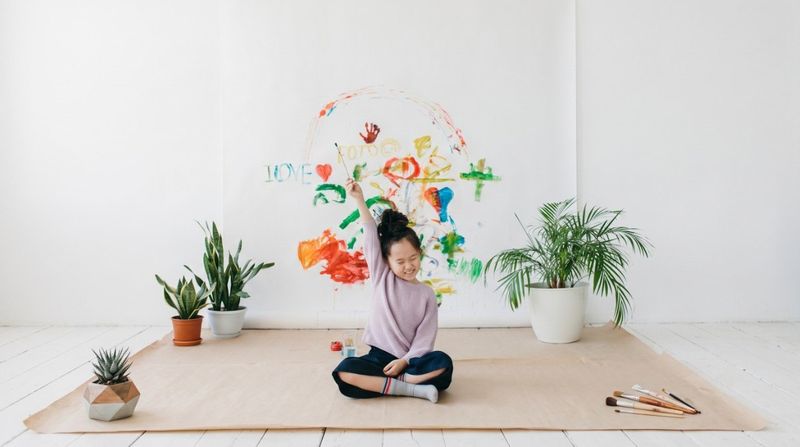
Play builds creative thinking through a few specific mechanisms, not just general enthusiasm.
Curiosity: Play runs on "what if," and that question is the starting point of almost every creative act. A student who wonders what happens if they layer two materials together is already doing the work an artist does.
Imagination: Open-ended play asks students to picture something that isn't there yet, then work toward it. That's a different muscle than following a reference image.
Experimentation: Trying different materials or methods without a fixed outcome in mind is how students find approaches they wouldn't have been taught directly.
Problem-solving: Play rarely goes as planned, and figuring out what to do when the paint bleeds the wrong way or the shape collapses is genuine problem-solving, just without the stress of it being labeled as a test.
Originality: When there's no single correct answer, twenty students working from the same prompt will land in twenty different places. That variation is the whole point.
Structured vs. Unstructured Creative Play
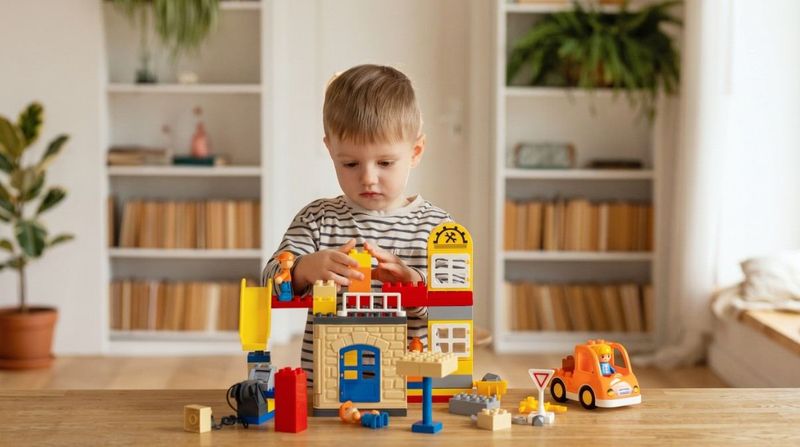
Not all play is the same, and treating it as one category misses something useful for teachers planning lessons.
Structured Play
Unstructured Play
Has a clear goal
Open-ended
Teacher provides direction
Student-led
Defined materials or rules
Greater freedom
Supports specific learning outcomes
Encourages exploration
Guided experimentation
Independent discovery
Neither version is automatically better. A student who has never worked with clay probably needs some structure just to get comfortable with the material before they can play with it meaningfully. A student who already knows a medium well often benefits more from being handed materials and left alone with them. The right balance depends on the student's age, their familiarity with the materials, and what the activity is actually trying to build.
Play and experimentation in art
Art is one of the few subjects where playful experimentation isn't a workaround, it's basically the method. Mixing colors that don't obviously belong together, working with a material a student has never touched, changing a composition mid-way through because something looked better that way: none of this fits neatly into a rubric, and that's precisely why it works.
Mistakes function differently in play-based art than they do almost anywhere else in school. A smudge becomes texture. A tear becomes a new shape to build around. Students who get comfortable treating an accident as material to work with, rather than a failure to correct, develop a kind of flexibility that shows up in their non-playful work too. Exploring texture, shape, movement, and form without a predetermined outcome is, in a real sense, the practice students need before they can do that same exploration deliberately.
Can older students benefit from play-based learning too?
Most of what gets written about play and learning focuses on early childhood, and that's a real gap. Play doesn't stop being useful once students learn to read. If anything, older students often need it more, because school gets more rigid and higher stakes the further they go, and the space for open-ended exploration shrinks accordingly.
For older students, play looks different but works the same way. It shows up as:
- Creative challenges with an open-ended prompt and no single right answer
- Visual puzzles that reward lateral thinking
- Experimental drawing without a fixed subject or technique
- Improvisation, building something in the moment without a plan
- Collaborative activities where the direction changes based on what a peer contributes
- Material exploration with something the student has never used before
- Open-ended prompts that leave room for a genuinely unexpected result
One art educator who's written about play in the secondary art room makes a point worth repeating: giving high school students supplies with minimal instruction and letting them figure out how to make the material work isn't a lesser version of teaching. It builds the same critical thinking, problem-solving, and creative confidence that structured instruction aims for, just through a different route.
Practical play-based art activities
A few low-prep ideas that work across a wide age range:
Draw without lifting the pencil: Forces observation and improvisation at the same time, since there's no going back to fix a line.
Turn a shape into something new: Give students an abstract shape and ask them to make it into anything they want. Simple, and it reveals a surprising range of thinking.
Create with an unusual material: Something students haven't used before removes their usual habits and forces new decisions.
Continue someone else's drawing: Students pick up a partner's unfinished piece and build on it, which builds both collaboration and the ability to adapt to someone else's idea.
What could this become? Hand students an everyday object, a bottle cap, a piece of cardboard, and ask them to visually transform it into something else entirely.
How teachers can create space for creative play
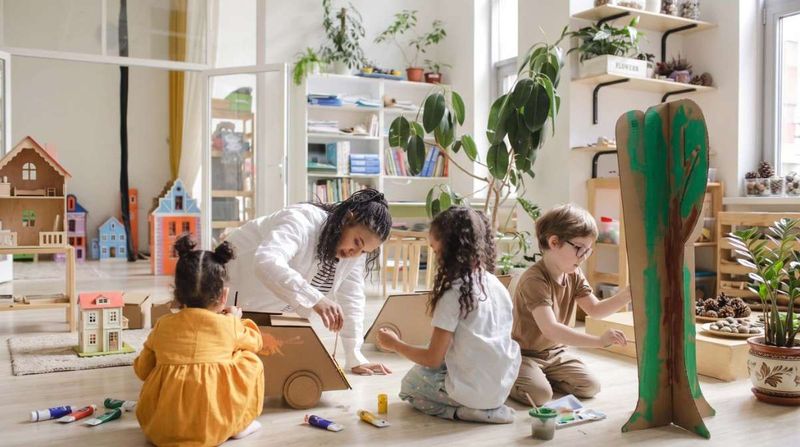
A few practical habits that make room for play without losing structure entirely:
- Give open-ended prompts that don't point toward one obvious answer.
- Accept that there can be multiple valid outcomes to the same activity.
- Resist correcting every unexpected result. Some of them are the point.
- Offer a real variety of materials, not just the standard set.
- Build in actual time for students to experiment, not just execute.
- Ask questions instead of jumping straight to solutions: "What happens if you try it the other way?"
- Let students explain what they discovered, even when what they discovered wasn't what the lesson was aiming for.
That single question, what happens if you try it another way, does a lot of work on its own. It hands the exploration back to the student instead of handing them an answer.
Conclusion
Play gives students permission to try something without needing to be right about it immediately. That permission matters more than it sounds like it should. Students who get comfortable experimenting, following an unexpected result, and adjusting their approach on the spot are building the actual habits of creative thinkers, not just having a good time in art class.
The goal isn't to make every lesson playful. It's to leave enough room, in art class and elsewhere, for curiosity and experimentation to do the work that direct instruction can't do on its own.
FAQs
1. Why is play considered important for creative development?
Play lets students try ideas without the pressure of being wrong, which makes them more willing to experiment, follow mistakes somewhere useful, and discover approaches they wouldn't have been taught directly.
2. How can play-based learning work for older students, not just young children?
Through open-ended creative challenges, experimental drawing, improvisation, and material exploration. Structure it around ambiguity and choice rather than simplifying it into something that reads as "for kids."
3. What's the difference between structured and unstructured creative play?
Structured play has a defined goal and teacher direction. Unstructured play is student-led and open-ended. Both have a place, and which one works better depends on the student's familiarity with the materials and what the activity is meant to build.
4. How does play-based learning connect to experimentation in art?
Art is one of the few subjects where playful experimentation is close to the actual method: trying materials, changing a composition, and treating mistakes as new material rather than errors to fix.