



You're sitting in a meeting, a lecture, or a long phone call, and somewhere along the way your notebook filled itself in. Circles, faces, flowers, boxes, arrows, and random spirals that lead nowhere in particular. You don't remember deciding to draw any of it.
Why did your hand start moving? Were you bored? Were you actually concentrating harder than it looked? Was your brain quietly working through something in the background while your pen wandered? Doodling looks random on the surface, but the act of making marks without a plan can tell us something genuinely interesting about attention, thought, memory, and how people express ideas visually, even when they're not trying to.
What Is Doodling?
Doodling is spontaneous, unplanned mark-making. It doesn't usually have a specific artistic goal in mind. A doodle can be a repeated shape, a symbol, a pattern, a scribbled word, a face, an object, or something entirely abstract that doesn't resemble anything at all.
Doodling Is Not the Same as Drawing
It helps to separate two things that often get lumped together. Doodling is spontaneous, low pressure, and usually unplanned. There's no outcome riding on it.
Intentional sketching is purposeful. It has a subject, an idea, or a specific result the artist is working toward.
That distinction matters later on, especially when we get into creativity and learning, because the two activities engage the mind in different ways.
What Happens in the Brain When We Doodle?
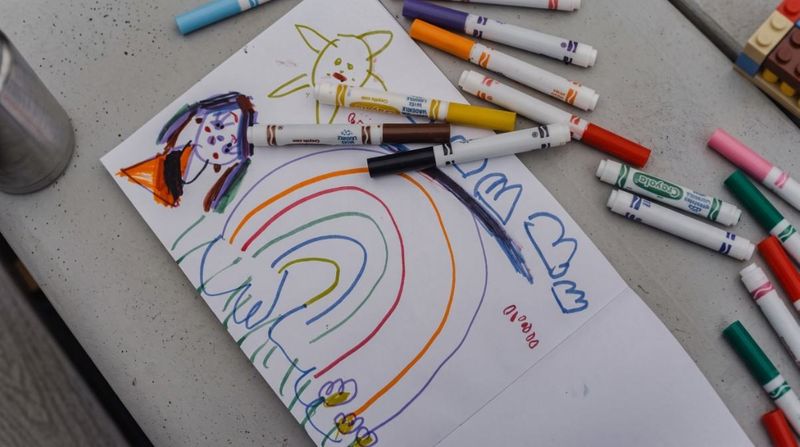
Doodling brings movement, attention, and perception together in a fairly simple way. Your hand is moving, your eyes are tracking marks, shapes, and spacing, and your brain is coordinating all of it, even if the whole process feels automatic.
The Brain Is Still Processing Information
Just because doodling looks like "doing nothing" doesn't mean the brain has switched off. Depending on the task at hand, doodling can run alongside attention to something else, like a lecture or a phone call, or it can compete with that attention if the doodle gets complicated enough to demand real focus.
Why Repetitive Patterns Can Feel Calming
A lot of doodles fall into repetition: the same loop, the same box, the same little pattern traced over and over. Repetitive movement like this can feel soothing for a lot of people, though it's worth being careful here. That doesn't mean doodling universally reduces stress or works the same way for everyone. It's a pattern worth noticing, not a rule to apply across the board.
Why Do People Doodle Without Realizing It?
There isn't one single reason. Common ones include:
- Boredom
- Habit
- Restlessness
- Staying engaged during a long stretch of listening
- Self-expression
- Enjoying the repetitive motion itself
- Working through an idea visually without words
Is Doodling a Sign of Boredom?
Sometimes, yes. Disengagement can absolutely lead to doodling. But it's a mistake to assume every doodler is bored. Plenty of people doodle while they're paying close attention, using the motion almost like a release valve that lets the rest of their focus stay locked in elsewhere.
Why the Same Shapes Appear Again and Again
Most people have a go-to doodle, a specific spiral, a cube, a flower, or a face shape they draw without thinking. That repetition usually comes down to personal habit, familiarity, and whatever visual patterns feel natural to that person's hand. Context plays a role too. What someone doodles during a stressful call might look different from what they draw during a relaxed conversation.
The Psychology of Doodling
Psychologists have looked into spontaneous drawing from a few different angles, mostly around attention and expression.
Doodling and Attention
Does doodling help someone stay engaged, or does it pull focus away from what they're supposed to be doing? The honest answer is that it depends. Simple, repetitive doodling during passive listening seems to work differently than a detailed drawing that demands real concentration.
Doodling and Emotional Expression
Some people reach for a pen to express something they wouldn't easily put into words. That's worth acknowledging. What's not worth doing is claiming that specific symbols in someone's doodles reliably reveal their emotional state or personality. That kind of claim goes further than the evidence actually supports.
Doodling as a Low-Pressure Form of Expression
Part of what makes doodling appealing is the total absence of expectation. There's no finished artwork to judge, no standard to meet. That freedom from perfection gives people room to experiment without worrying about the result.
Does Doodling Help or Hurt Focus?
This is probably the question people care about most, so it deserves a direct answer.
When Doodling May Support Attention
Simple, repetitive doodling during something passive, like a long meeting or a lecture, may help some people stay engaged rather than checking out entirely. The key word is "some." This isn't universal, and it depends heavily on the person and the situation.
When Doodling Can Become a Distraction
Complex drawings are a different story. A detailed sketch takes real attention, and attention is a limited resource. If someone is deep in an elaborate illustration during a meeting, they're very likely not absorbing much of what's being said.
The Difference Between Simple Doodling and Drawing
A few repeated shapes traced absentmindedly are not the same cognitive task as designing an elaborate illustration. One barely taps attention. The other demands it. Lumping them together as "doodling" misses an important distinction.
Doodling, Memory, and Learning
There's a meaningful difference between making marks and intentionally using drawing as a way to remember something.
Can Drawing Help Us Remember Information?
Active engagement with material, including drawing it out, can support learning in certain contexts. Visual note-taking, diagrams, symbols, and quick sketches are commonly used as memory tools, and there's reason to think that intentionally representing information visually helps some people retain it better than passive listening alone.
Doodling vs. Drawing to Learn
That said, spontaneous doodling and intentional visual note-taking aren't the same activity, even though they both involve a pen and a blank space. Doodling is usually disconnected from the content being discussed. Drawing to learn is directly tied to it. The second one is far more likely to support memory, simply because it's engaging with the actual material rather than wandering off from it.
What Do Our Doodles Actually Reveal?
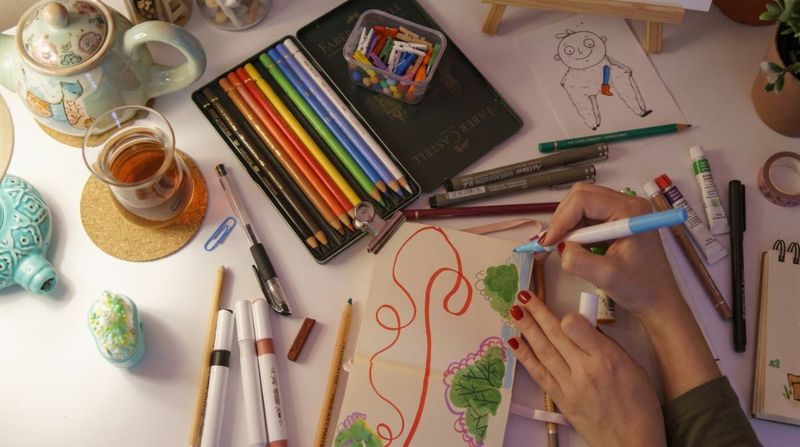
Doodles can offer a small window into a few things:
- What catches someone's visual attention
- Recurring interests or motifs
- Personal drawing habits
- Comfort with experimentation
- How someone organizes visual information
- Spontaneous creative preferences
Can You Really Read Someone's Personality From Their Doodles?
This is where a lot of popular content goes too far. Viral "doodle personality tests" claiming that a flower means one thing and a spiral means another should be treated with real skepticism. A single symbol in a doodle doesn't reliably reveal someone's personality. Context, mood, habit, and situation all shape what ends up on the page, and reducing that to a fixed meaning oversimplifies something much messier and more personal.
Can Doodling Become Art?
Sometimes. A random mark can spark an idea worth developing further. Artists frequently work through rough, unplanned sketches before landing on something intentional, and it's not unusual for a spontaneous doodle to evolve into part of a finished composition. The line between the two isn't always as sharp as the table above suggests.
Can Doodling Encourage Creativity?
Low-pressure mark-making creates room for a few things that matter to creative thinking:
- Experimentation
- Idea generation
- Visual exploration
- Noticing patterns
- Connecting ideas that don't obviously belong together
- Getting past the fear of a blank page
Why There Is No "Wrong" Doodle
There's no standard to meet and nothing that needs to look a certain way. That absence of a "correct" outcome is exactly what makes doodling useful as a creative warm-up. The value tends to sit in the exploring, not in whatever ends up on the page.
How Teachers Can Use Doodling in the Classroom
Doodling has real classroom potential when it's used with intention.
Doodle Before You Write
Ask students to represent a concept visually before putting it into words. It can loosen up thinking before the more structured writing task begins.
Turn a Shape Into an Idea
Give students one simple shape and ask them to transform it into as many different things as they can. This builds flexible thinking quickly.
Doodle What You Heard
After a story or a lesson, have students create small visual marks representing the key ideas they picked up. It's a quick, low-stakes way to check what's stuck.
Five-Minute Free Doodle
Give students five minutes with no expected outcome at all. Afterward, ask, "What did you notice while you were drawing?" The reflection matters more here than the drawing itself.
Simple Doodling Activities for Students
Activity 1: One Shape, Ten Ideas Start with one circle and turn it into 10 different things.
Activity 2: Doodle a Feeling Represent an emotion without using words or a recognizable face.
Activity 3: Complete the Random Line Give students an unfinished line and let them turn it into a full image.
Activity 4: Story Doodle Listen to a short story, then create five visual marks representing what happened.
Activity 5: Pattern Challenge Build a repeating pattern using only three basic shapes.
Is Doodling Really "Mindless"?
The word gets used constantly, and it's worth pushing back on a little.
Doodling might be spontaneous, but the brain is still coordinating movement and perception the whole time. Even the simplest marks involve small choices, like where to place the next line and how big to make the next shape. A doodle can also shift, starting as an automatic scribble and gradually turning into something more consciously explored.
A doodle may begin without a plan, but that doesn't mean the brain isn't involved.
Read More: From Student to Working Artist: Career Paths in Visual Arts
What Science Says and What It Doesn't Context Memory
What Research Can Tell Us Individual
- Doodling has been studied in relation to attention and memory.
- Drawing and visual encoding can support learning in certain contexts.
- The effects depend heavily on concentrationawing, the task, and the individual.
What We Shouldn't Assumememory
- That every doodle reveals a hidden personality trait
- That doodling always improves concentration.
- That doodling always improves memory.
- That every spontaneous drawing carries some deeper psychological meaning
Keeping these boundaries in mind is what separates an honest look at doodling from pop psychology dressed up as science.
Conclusion
Doodling might look like a page full of meaningless marks, but it can offer a small window into how people move, notice, explore, organize, and express ideas visually, often without meaning to. At AJF, the value of art isn't limited to the finished picture. The act of making marks, exploring possibilities, changing an idea midway, and finding a visual solution can itself be part of creative thinking, long before anything resembling a "final piece" shows up.
Sometimes the smallest marks on a page can show us that the mind is doing much more than we think.
FAQs
1. What does doodling actually reveal about brain activity?
Doodling shows that the brain stays active during movement and mark making, even when it looks like nothing much is happening. It reflects ongoing coordination between attention, perception, and motor control, though it doesn't reveal specific thoughts or hidden meanings on its own.
2. Does doodling help or hurt focus and memory?
It depends on the type of doodling and the person. Simple, repetitive doodling during passive listening may help some people stay engaged. Detailed, complex drawing tends to compete with attention rather than support it, especially when there's something else that needs focus.
3. Why do people doodle without realizing it?low pressure
Common reasons include boredom, habit, restlessness, and a need for some kind of engagement during passive situations like meetings or lectures. Not every doodler is bored. For some, doodling actually helps maintain focus rather than pulling away from it.
4. Can doodling be used as a creative or learning tool in class?
Yes. Teachers can use structured doodling activities to build flexible thinking, encourage visual note-taking, and give students a low-pressure way to explore ideas before turning them into words.
5. Can doodling improve creativity?
It can support creativity by lowering the pressure to produce something "correct," which makes room for experimentation and unexpected connections. It's not a guaranteed creativity boost for everyone, but it removes some of the friction that stops people from starting.