


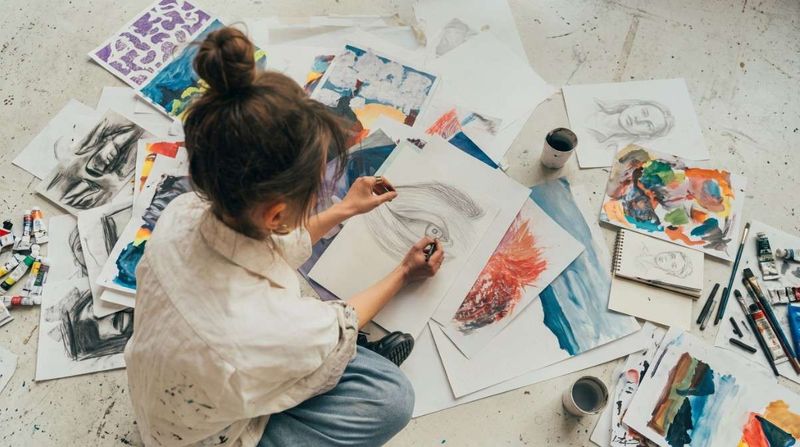
What can you actually do with a degree in visual arts? Most people answer this the same way. Painter, illustrator, maybe an art teacher if the other two don't work out. That's the version a lot of students grow up hearing, and it hasn't been accurate for a while now.
Design studios, animation pipelines, ad agencies, game studios, publishing houses, fashion brands, none of these call themselves "art jobs" on the label, but they're all built on people who can see, think, and make things visually. That's really what this comes down to: what those paths actually look like in practice, and how someone actually gets from student to working artist without just hoping it works out.
What Does It Mean to Be a Working Artist?
Nobody agrees on one definition, and that's part of why this confuses people more than it should. A working artist doesn't have to mean self-employed, showing in galleries, living out the stereotype most students picture. Plenty of working artists get a salary and health insurance and report to someone on a Monday morning like anyone else. Others build the whole thing from nothing, on their own terms, answering to no one but a client and a deadline.
Talent isn't really what separates a student from a professional. It's more about consistency, showing up reliably, and delivering work that fits someone else's brief instead of just your own vision. Some artists work independently, taking clients or selling work directly. Others work inside an organization, a studio, an agency, a publisher, a school. Neither one is more "legitimate" than the other, and most people who actually make a living at this end up somewhere between the two rather than fully committed to one side.
Career Paths in Visual Arts
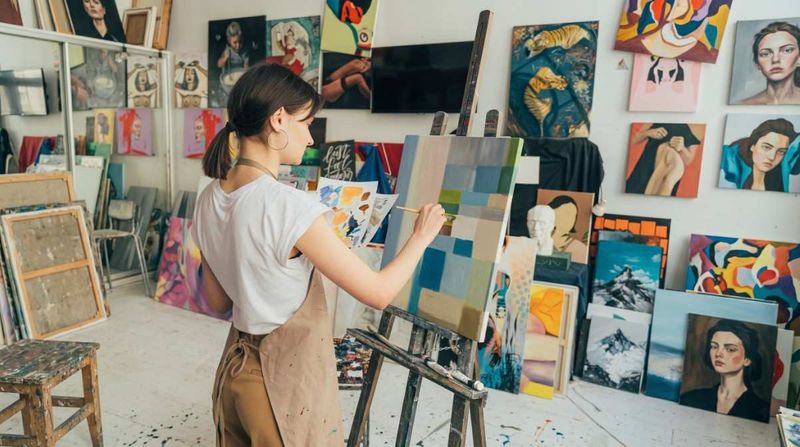
Let's actually get into where a visual arts background can take you, because the list is longer than most people expect.
Fine art is the one everyone already knows: painters, sculptors, printmakers, contemporary artists working in galleries or independently. It's a real path, just not the only one.
Illustration covers editorial illustrators (the people doing artwork for magazines and news pieces), children's book illustrators, digital illustrators, and concept artists who help visualize characters and worlds before they're built in games or films.
Design is a massive category on its own. Graphic designers, UI/UX designers, brand designers, and product designers all draw on visual training, even though the day-to-day work looks pretty different from painting or drawing.
Digital and media roles include animators, motion graphics artists, 3D artists, game artists, and VFX artists, all of which have grown enormously as gaming, streaming, and digital content have exploded.
And then there's a category that gets less attention: art direction, set design, art education, and creative content work, all of which need someone with a strong visual eye but don't fall neatly into "fine artist" or "designer."
Careers Beyond Traditional Fine Art
Here's a misconception worth pushing back on directly: that visual arts only leads somewhere gallery-adjacent. It really doesn't.
Advertising hires constantly for concept work, storyboarding, campaign visuals. Film and TV need full art departments, storyboard artists, set designers, people whose entire job is making a world look believable before a camera ever rolls. Gaming and animation studios run entirely on visual talent, at pretty much every stage. Publishing needs illustrators and cover designers who can capture a book's whole feeling in one image. Fashion houses need people who can sketch and communicate an idea before a single piece of fabric gets cut. Architecture firms bring in people with strong spatial and visual thinking more often than people assume. Branding agencies need visual storytellers. Digital media companies need content that just looks genuinely good, which is harder than it sounds at scale. And education always needs people who can actually teach what they know, not just do it.
The thread connecting all of this is that the skill transfers even when the medium doesn't. Observing, composing, communicating visually, that carries across almost every one of these industries even though the daily work looks nothing alike from one to the next.
Can You Actually Make a Stable Income as a Freelance Artist?

Yes, but it takes longer than people expect, and it looks messier along the way than the version that gets posted online.
Most freelance artists aren't living off one client or one income stream. It's usually a mix, commissions, licensing older work, illustration jobs, workshops, teaching a class here and there, selling digital products like brushes or templates, the occasional brand collaboration. Rarely just one thing.
Income moves around a lot, especially in the first couple of years. Clients don't show up because you posted once, they show up because someone heard about you from someone else, which takes actual time to build. And there's more admin than most students expect, invoices, contracts, tracking what you're owed, figuring out taxes on income that isn't the same amount two months in a row. Budgeting for that kind of income is a different skill than budgeting for a fixed paycheck, and it's usually the part nobody warns you about ahead of time.
Doable, genuinely. Just not the effortless passion-only path it sometimes gets sold as.
Skills That Matter Beyond the Art Itself
Talent gets you in the door. It's rarely what keeps you employed.
A lot of it comes down to communicating clearly, whether that's with a client who has no visual vocabulary or a teammate who needs to understand why you made a specific choice. Deadlines stop being optional once you're managing three projects instead of one assignment, so time management stops being a nice-to-have fairly quickly. Relationships end up mattering more than most students expect, not in some networking-event way, just genuinely knowing people in your field tends to open doors that a cold application never does. Knowing how to actually present your work, talk about it, put together a portfolio someone wants to sit through, is its own separate skill from making the work in the first place. And then there's the business side nobody teaches in art school: pricing fairly, understanding a contract before signing it, sending an invoice on time, none of it glamorous, all of it necessary if you want this to be sustainable rather than a hobby with better lighting.
Tools change fast in this field too. Staying attached to one software or one style for too long tends to box people in over time.
Getting From Art Student to Working Professional
There's no single correct order for this, but here's roughly how it tends to go for people who make it work.
You build the actual foundation first, the technical and creative skills you'll lean on no matter where you end up. Then you explore, try mediums and styles and fields you're not sure about, because most people don't actually know what they enjoy until something surprises them. From there, a portfolio starts to take shape, and the goal isn't showing everything you've made, it's showing your strongest and most relevant work specifically. Real experience comes next, internships, freelance gigs, collaborations, or ambitious personal projects if nothing formal is available yet. Feedback from teachers, mentors, working artists catches blind spots you genuinely can't see in your own work. Then you start applying, internships, jobs, commissions, whatever actually fits where you're at right now. And the learning never really stops, the people who stay employable long-term are usually the ones who kept developing both their craft and the less exciting professional skills around it.
Practical Steps for Actually Starting
If you're stuck on where to begin, waiting for the "right moment" usually isn't it.
Figure out what you're actually drawn to instead of trying to be good at everything at once. Keep your portfolio focused rather than a dumping ground for every piece you've ever finished. Get some kind of online presence going, even something simple, because a lot of opportunities now start with someone finding your work before they ever meet you in person. Show up for exhibitions or creative opportunities when they come around, even small local ones count. Get to know other artists, since this field runs on relationships more than most people expect walking in. Apply for internships and entry-level roles even when they're not exciting. And keep some record of your work and progress over time, because looking back at how far you've come tends to be more motivating than anything else on this list.
The Working Artist Lifestyle, Without the Filter
Both sides of this are real, and pretending otherwise doesn't help anyone.
There's genuine creative freedom, real variety from one project to the next, actual personal expression, and often more flexibility than a standard office job offers. That's not marketing talk, it's a big part of why people choose this in the first place, and for a lot of working artists it's worth the trade-offs that come with it.
But freelance income can swing wildly. Deadlines show up whether or not the idea's ready. Client feedback doesn't always land the way you hoped, sometimes it's blunt, sometimes it misses the point entirely, and you still have to work with it. Competition is real in almost every corner of this field. Staying relevant means learning new things constantly, whether or not you feel like it that month. And balancing the creative side with the business side isn't something you solve once, it's an ongoing thing you keep adjusting.
It's somewhere in the middle of both pictures. That's just what it is.
There's No Single Right Path Here
Trying to find the "correct" route out of art school is probably the wrong question to be asking in the first place. Some people go independent. Others land in design studios, ad agencies, animation companies, publishing, gaming, education, or in roles that don't fully exist yet in the way we currently talk about them.
What actually matters more is exploring, experimenting, building real skills instead of just planning to someday, and figuring out where your specific strengths create value for someone else. Visual arts as a career isn't really a choice between art and stability, even though it gets framed that way constantly. With the right skills, a bit of planning, and a willingness to adjust as things shift, a lot of people find a way to hold onto both.
One last thing worth sitting with: what you develop through art, observation, visual reasoning, imagination, problem-solving, experimentation, communication, is useful in more places than the art world itself. Learning art was never only about becoming an artist. It shapes how you think, and that part stays useful no matter which direction you end up going.
FAQs
1. What career paths are available to visual arts students?
Fine art, illustration, graphic and UI/UX design, animation, game art, VFX, art direction, education, and freelance work, along with roles across advertising, publishing, and fashion.
2. Can you make a stable income as a freelance artist?
Yes, though it usually comes from combining a few income sources, commissions, licensing, teaching, client work, rather than one steady paycheck, and it takes real time to build.
3. What non-technical skills matter for an art career?
Communication, time management, relationships in your field, self-presentation, basic business sense, and adaptability all end up mattering as much as raw talent.
4. How does a student transition into working professionally?
Through building foundational skills, trying different mediums and fields, putting together a focused portfolio, gaining real experience through internships or freelance work, and continuing to learn well past graduation.
5. What industries hire visual arts graduates besides fine art?
Advertising, film and television, gaming, animation, publishing, fashion, architecture, branding, digital media, and education all hire people with a visual arts background regularly.