



There's a moment almost every art student hits, usually a few months in, where the work stops being about technique and starts feeling stuck. They can draw the hand correctly now. The proportions are fine. And yet something about the piece still feels flat, and they can't say why. We've watched this happen with a lot of students at AJF, and it's usually the point where mentorship for art students stops being a nice-to-have and starts actually mattering.
A mentor isn't there to hand a student a checklist. Good ones ask annoying questions instead, the kind that make a student stare at their own painting a little longer than they'd like. "Why did you put the figure there and not there?" "What were you trying to say, and did it land?" A classroom teacher, juggling twenty other students and a syllabus to get through, rarely has time to push that hard on one person's work. A mentor does.
What is art mentorship, actually?
Strip away the jargon and it's fairly simple: an art mentor is someone more experienced who sticks with a student over months, not just for one class period. The gap between a teacher and a mentor isn't really about skill level. It's about time and attention. Teachers have a room full of kids and a curriculum they're accountable for. Mentors can slow down and follow one person's confusion wherever it leads.
This is roughly what people mean by mentor guidance for young artists. It's less "Here's the correct way to shade a sphere" and more "You keep avoiding negative space in every composition; let's actually talk about why." That second kind of comment is what starts building a real mentor-artist relationship instead of a string of disconnected corrections.
Does it actually help, or is this just a nice idea?
Fair question. In our experience, yes, and the benefits of art mentorship tend to show up in fairly unglamorous ways. Feedback stops being generic. A student's confidence grows, not because someone's flattering them, but because someone is paying close, consistent attention to their progress instead of just their finished pieces. They get pushed toward materials and approaches they'd never have picked up on their own. Strengths and weak spots get named instead of vaguely gestured at. And when a student hits a creative slump, which happens to literally everyone eventually, there's someone checking in who notices before it turns into three months of not picking up a pencil.
None of this replaces a proper art education. It's not meant to. Think of it as a second track running alongside the first one.
What can a mentor teach that a classroom genuinely can't?

This one's worth laying out plainly, because it's the crux of the whole argument.
Classroom
Mentorship
Structured, curriculum-based
Shaped around the individual student
Feedback is general
Feedback is specific to that student's work
Focused mainly on technical skill
Focused on artistic development as a whole
Limited one-on-one time
Ongoing, regular conversations
Fixed pace for the whole group
The pace adjusts to the student
To be clear, this isn't a knock on teachers. Mentorship doesn't replace formal education, and any mentor who says otherwise is overselling themselves. It's just a different kind of attention, the kind that's nearly impossible to give in a room of forty students.
Okay, so how do you actually find a decent mentor?
Not by grabbing whoever has the flashiest Instagram, honestly. Credentials matter less than people assume. What matters more:
Do they actually get the kind of art this specific student is drawn to, or just art in general? Have they done real work, whether that's professional practice, teaching, or ideally both? Do they give feedback that's constructive instead of just blunt for the sake of it? Are they willing to let a student try something that might completely fail? Do they respect that the student's style doesn't need to end up looking like theirs?
That last one trips a lot of well-meaning mentors up. Someone who quietly nudges a student toward imitating their own work isn't mentoring. They're just directing, and it usually shows up in the student's portfolio a year later as a bunch of pieces that all look slightly like someone else's.
What should a student actually expect once this is underway?
It settles into a rhythm, usually. Regular check-ins, honest reviews of recent work, some goal-setting, portfolio feedback if a student's building toward applications or a career path. Conversations wander into where the industry's heading, what art school actually looks like day to day, that sort of thing.
And yes, there will be criticism a student doesn't want to hear. We'd be lying if we said otherwise. But talk to almost any student a year or two out, and the moment they usually point to as the turning point is some blunt piece of feedback that stung at the time.
How mentorship actually pushes creative growth forward
This is close to the core of what AJF cares about, honestly: observation, visual reasoning, imagination, expression. A mentor's job was never to make a student paint like them. It's closer to teaching someone how to actually look at things, so the improvement keeps happening long after the mentorship itself has ended.
The better art mentorship programs spend less time correcting brushwork and more time asking why a student made a specific choice. Why that color. Why that crop. Why leave that corner empty. Ask that enough times and a student starts asking it of themselves, unprompted, which is really the whole point. That's mentorship in creative education doing its actual job, not producing a better drawing this week but producing someone who can keep improving without anyone standing over their shoulder.
What this means for where a student ends up later
The importance of mentorship in creative fields gets a lot more obvious once a student starts taking art seriously as something beyond a hobby. Someone who's actually worked in the field can walk them through stuff no classroom covers well: what different creative jobs actually look like on a Tuesday, how to build a portfolio that isn't just a folder of class assignments, what admissions committees are actually looking for, how networking works when half the industry runs on word of mouth, what it's like once a client is attached to the work and not just a grade.
Art career mentorship also does something harder to teach on purpose, which is help a student figure out what makes their own work theirs. Not a brand. More like a fingerprint. Useful whether they end up in illustration, fine art, design, or some hybrid that doesn't have a tidy name yet.
Why learning from people who are still doing the work matters
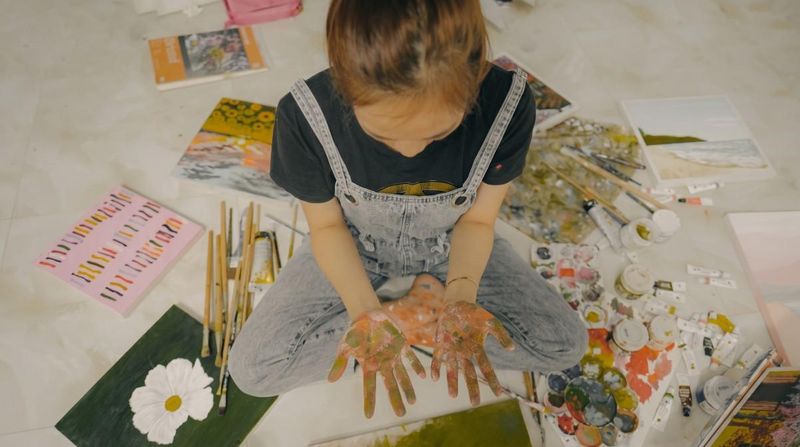
There's a real gap between technique taught in a classroom and what you pick up from someone currently working in the field. People still doing the work can talk about the stuff that never makes it into a textbook: a client asking for a fifth round of revisions, what a genuinely tight deadline feels like, what happens when your first three ideas for a piece just don't work and you're staring at a blank page at 11pm.
That kind of thing rarely arrives as a formal lesson. More often it's a mentor just thinking out loud about how they'd tackle something, and a sharp student picking up on the process instead of waiting for a clean answer.
Making the relationship actually work
This part depends on the student too, not just the mentor. A few things genuinely help:
Ask questions instead of waiting to be handed instructions. Curiosity gets more out of a mentor than sitting quietly and nodding.
Actually consider feedback you don't like. You don't have to take every suggestion, but dismissing it before thinking it through defeats the point.
Show the ugly drafts, not just the finished piece. Sketches, failed attempts, things you gave up on halfway. A mentor working only from polished final pieces is flying half blind.
Set goals that are specific enough to actually respond to. "Get better" isn't one. "Stop relying on the same three compositions" is.
Show up. Consistently. This isn't a one-conversation fix, and treating it like one is the fastest way to waste a good mentor's time.
A mentor doesn't build the artist, they help the artist find their own way
A good mentor was never going to hand a student a finished vision to copy. They ask better questions, offer an angle the student hadn't considered, push back on lazy assumptions, and then get out of the way so the student can actually work it out themselves.
For young artists, mentorship for art students was never really a shortcut to raw skill. It's closer to having a second set of eyes around long enough to notice the patterns you can't see in your own work yet. And that matters well past whatever piece happens to be sitting on the easel this month.
FAQs
1. Why is mentorship valuable for art students?
Mostly because it gives students personalized, consistent feedback that a classroom, with its fixed pace and packed roster, just isn't built to provide.
2. What can a mentor teach that a classroom cannot?
Individual attention, feedback tuned to that one student's actual work, and ongoing conversations about where their art is heading, not just how it looks today.
3. How do students find the right art mentor?
Look for real experience in the area the student cares about, honest and constructive feedback, and a willingness to respect the student's own style instead of pushing them toward a copy of the mentor's.
4. What should students expect from a mentorship relationship?
Regular check-ins, reviews of recent work, goal-setting, portfolio help, and occasionally some direct criticism that's meant to push the work forward, not just point out flaws.
5. How can mentorship influence a student's future career path?
A mentor who's actually worked in the field can explain what different creative careers look like in practice, help build a real portfolio, and offer a sense of what professional expectations look like once there's a client involved.