


Ketaki Paralikar Yadav is a Visual Arts Curriculum Leader with more than 15 years of international school teaching experience for IGCSE, MYP and IBDP Visual Arts. She creates open educational resources focused on building student creator mindsets, prioritising authentic artistic inquiry over rubric box-ticking.
For many educators, new assessment frameworks can quickly become reduced to checklists. The newly revised IBDP Visual Arts Artist Project (first examination 2027) is brand new, leaving students and teachers unsure how to approach it. It is simple to slip into a mindset focused only on meeting marking requirements, losing sight of authentic creative practice.
The updated IBDP Visual Arts assessment objectives already prioritise these very skills: observation, conceptual thinking, risk-taking, dialogue and audience awareness. The gap for most learners and teachers is not knowing how to begin. How do we turn these written objectives into tangible creative action, before worrying about screen limits and word counts?
As an art educator working within an international school setting, I have watched students approach the Artist Project with anxiety. They fixate on how many artworks to reference, word count limits, or screen allocations, before they have even unpacked their own curiosity. This tension is familiar across high-stakes creative subjects: how do we honour formal curriculum expectations without squeezing out authentic creative identity? The answer, I believe, lies in reframing each stage of the Artist Project as an opportunity to build creator mindsets, not just meet criteria — and beginning with observation.
Begin With Observation
The project begins with the Proposal, Criterion A. On the surface, this section asks students to define a concept, research context and plan where their artwork will be realised. The very first step is not to pick a grand theme, or hunt for reference artists. It is slow, intentional observation: noticing the place they inhabit, small personal moments, overlooked local details, and the questions these observations raise.
Learners ask: What do I notice about the world around me? What story do I want to communicate, and who is my audience? This foundational observation work becomes the seed for their entire project.
Connections Are More Than Comparison
Moving into Connections (Criterion B), students research artists from different cultural backgrounds and draw links between external artworks and their own practice. This stage pushes learners to move beyond surface-level comparisons. Instead of merely describing artwork, they investigate cultural and historical contexts, understanding how artists’ lived realities shape creative choices. This teaches young creators that art exists in dialogue across time, geography and identity.
Feedback as a Creative Practice
Criterion C, Dialogues, is where feedback becomes a creative practice, not correction. Students document conversations with peers, teachers and community members, then adapt their ideas in response. Many young creators fear criticism; they see feedback as judgement. The Artist Project’s emphasis on dialogue helps reframe critique as collaborative inquiry. It teaches that creative work evolves through conversation, revision and vulnerability.
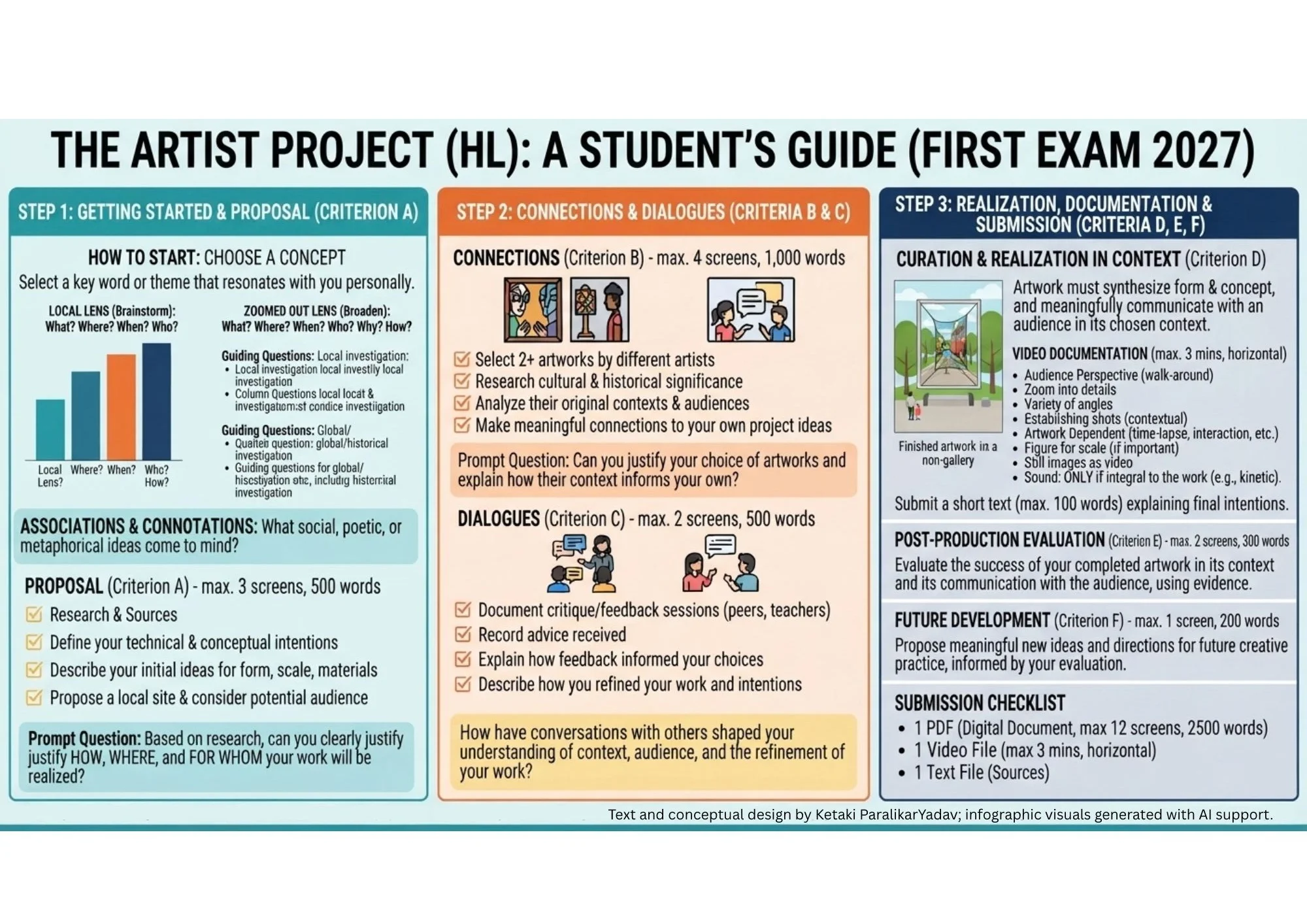
A visual roadmap of every stage of the Artist Project, from getting started to the submission checklist.
Realisation, Evaluation and What Comes Next
In the final phases, Realisation, Post-Production Evaluation and Future Development students bring their concept into physical form, curate work for a specific audience, document the piece in its intended setting, and honestly evaluate what succeeded and what did not. The final reflection invites them to imagine new creative directions beyond the boundaries of the assessment itself.
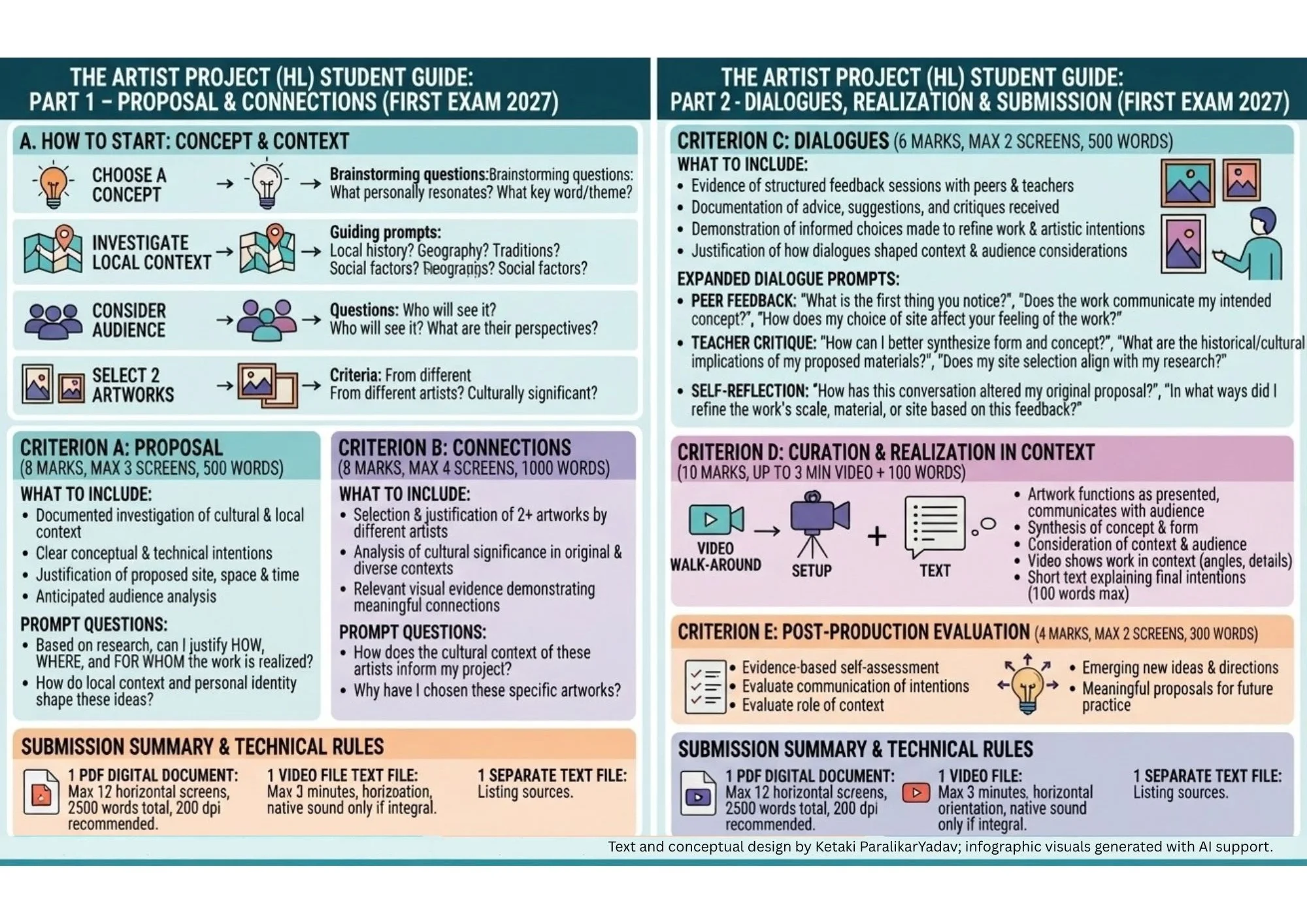
Part 1 covers Proposal and Connections; Part 2 covers Dialogues, Realization and Submission — with the criteria, word counts and technical rules for each stage.
To help learners navigate this journey, I designed a visual roadmap infographic unpacking every stage of the Artist Project. This resource translates dense official syllabus language into clear, student-centred visuals. It does not prioritise scoring rubrics; instead, it keeps focus on inquiry, dialogue, place and audience. I have also created a bank of visual journal inquiry prompts to support learners through that vital first observation step, and all the reflective work that follows. These prompts encourage regular reflection, helping students capture observations, questions and evolving ideas in their visual journals as their project unfolds.
Both resources are open educational materials, freely available for educators and young creators to adapt. They are hosted publicly on my LinkedIn profile for the global creative community to access.
Core Value for Educators
- Shifts student focus from “what do I need to submit?” to “what do I want to investigate?”
- Aligns prompt questions and activities to each criterion of the Artist Project
- Gives structured, low-pressure ways for students to test ideas before committing to a final proposal
- Encourages risk-taking and peer dialogue, not only finished artwork
Conclusion
High-stakes assessment does not have to be the enemy of creativity. The Artist Project can be a powerful vehicle to nurture the full creator in every young person. When we guide learners to begin with careful observation, then build outward to think critically, take creative risks and engage thoughtfully with others, assessment becomes a creative journey rather than a checklist.